Let Us Discuss Energy
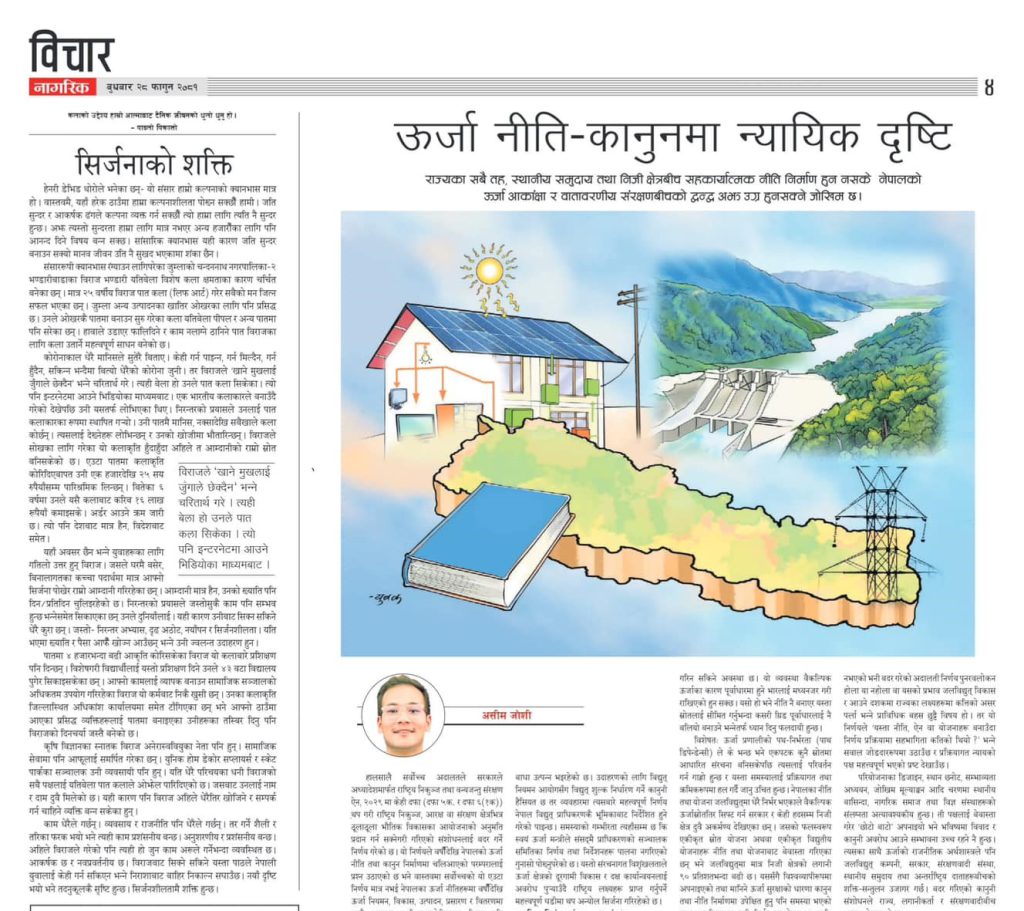
…As a result of such fragmented laws, energy development ambitions and environmental protection legislation have emerged not as complementary objectives but as competing ones. This imbalanced approach not only exposes the country to the risk of judicial intervention, but also leads to project delays and undermines long-term energy planning. The core of the problem lies in the processes and systems through which laws and policies are made, as well as in the energy paradigms and related practices that we have adhered to for decades.…
More...
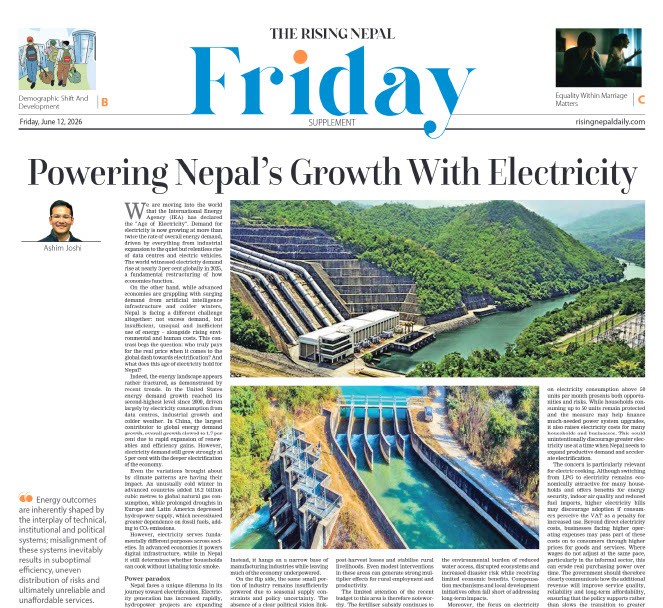
…The world witnessed electricity demand
rise at nearly 3 per cent globally in 2025,
a fundamental restructuring of how
economies function. On the other hand, while advanced economies are grappling with surging demand from artificial intelligence infrastructure and colder winters, Nepal is facing a different challenge altogether: not excess demand, but insufficient, unequal and inefficient
use of energy – alongside rising envi-
ronmental and human costs. This con-
trast begs the question: who truly pays
for the real price when it comes to the
global dash towards electrification? And
what does this age of electricity hold for
Nepal?
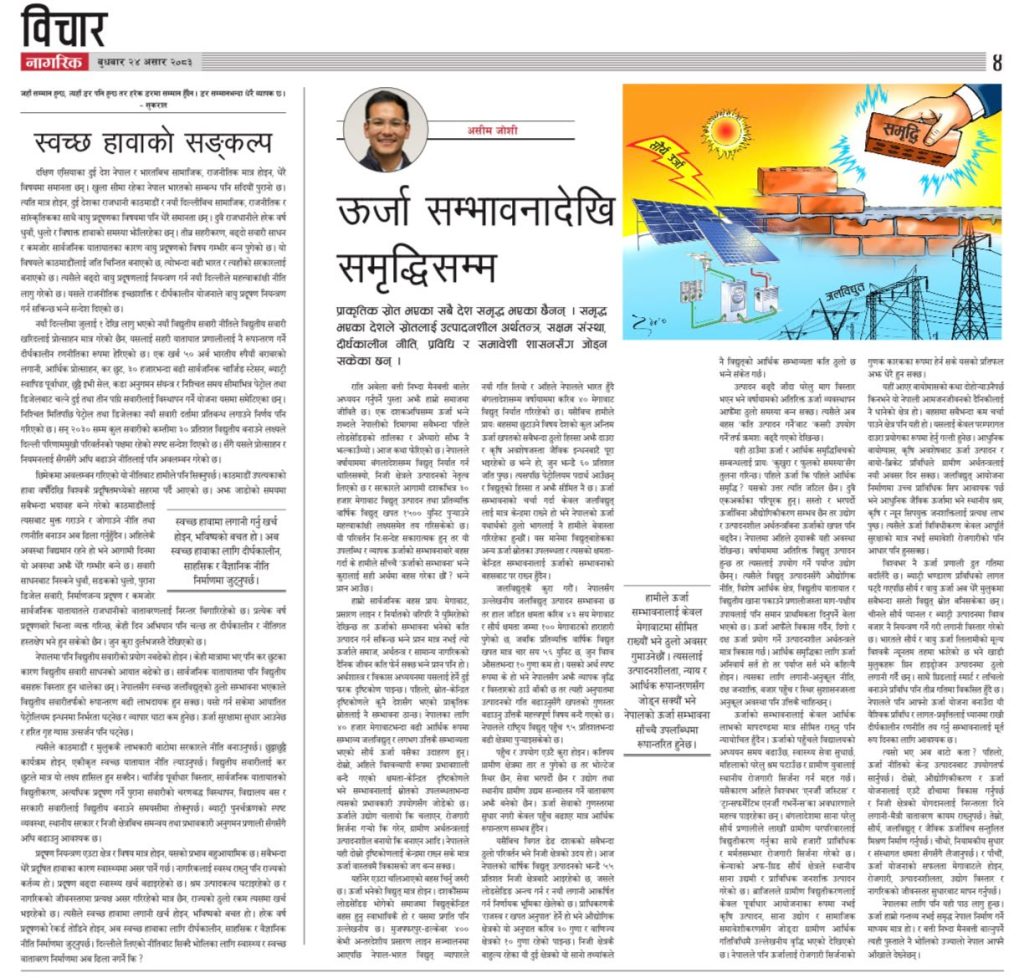
Our public debate often focuses on megawatts, transmission lines and electricity exports. But energy potential is not just about how much power we generate. It is about how energy transforms society, strengthens the economy and improves people’s daily lives.
The relationship between #Energy and #EconomicDevelopment is often described as the “chicken-and-egg” question: which comes first?
In reality, they reinforce each other. Affordable, reliable energy enables industrialisation, while a productive economy drives electricity demand.
Also, energy should also be valued beyond economic returns. It improves education, healthcare, opportunities for women and rural livelihoods. That is why #EnergyJustice and #TransformativeEnergy Governance are becoming central to energy policy worldwide.