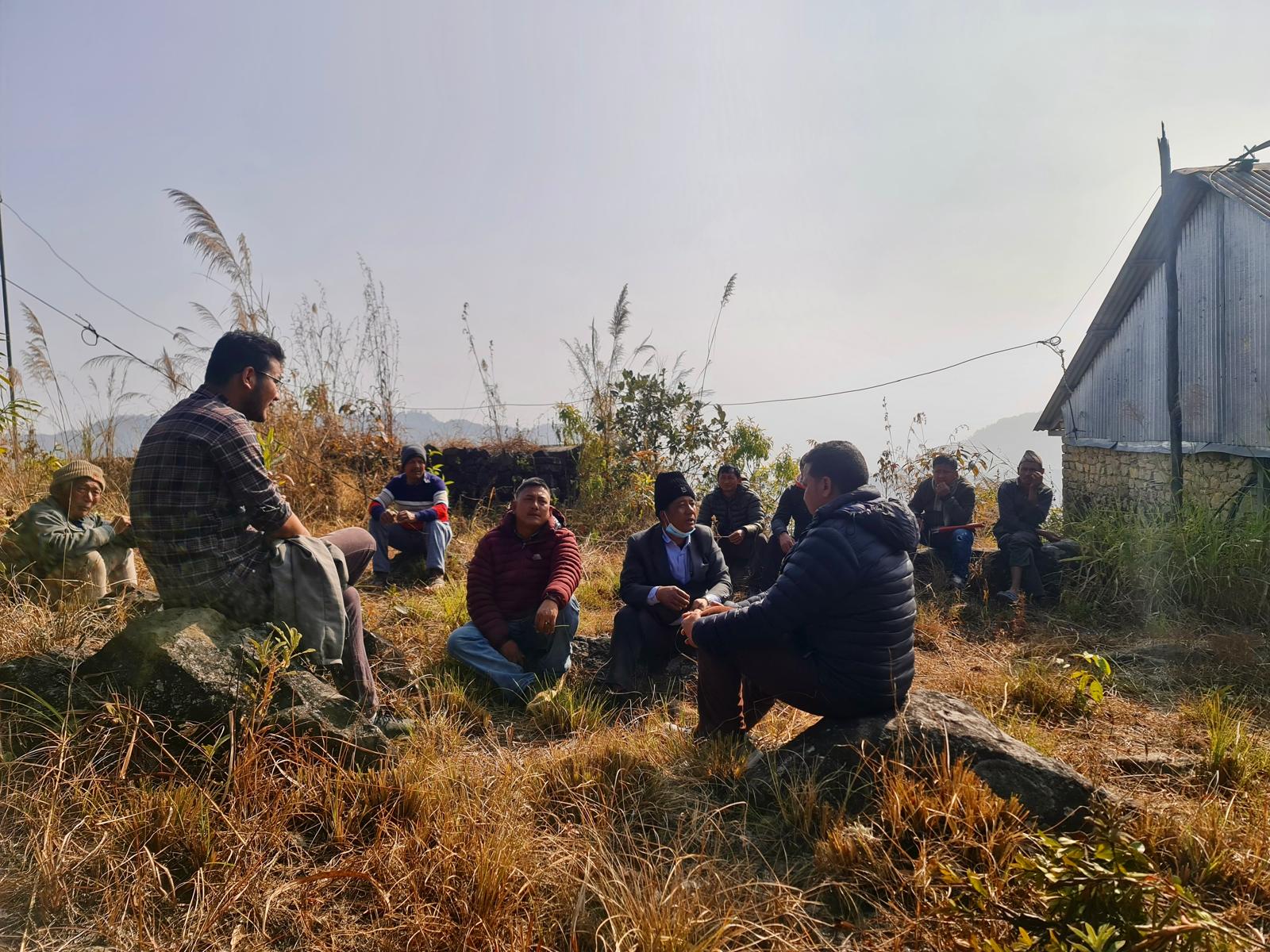
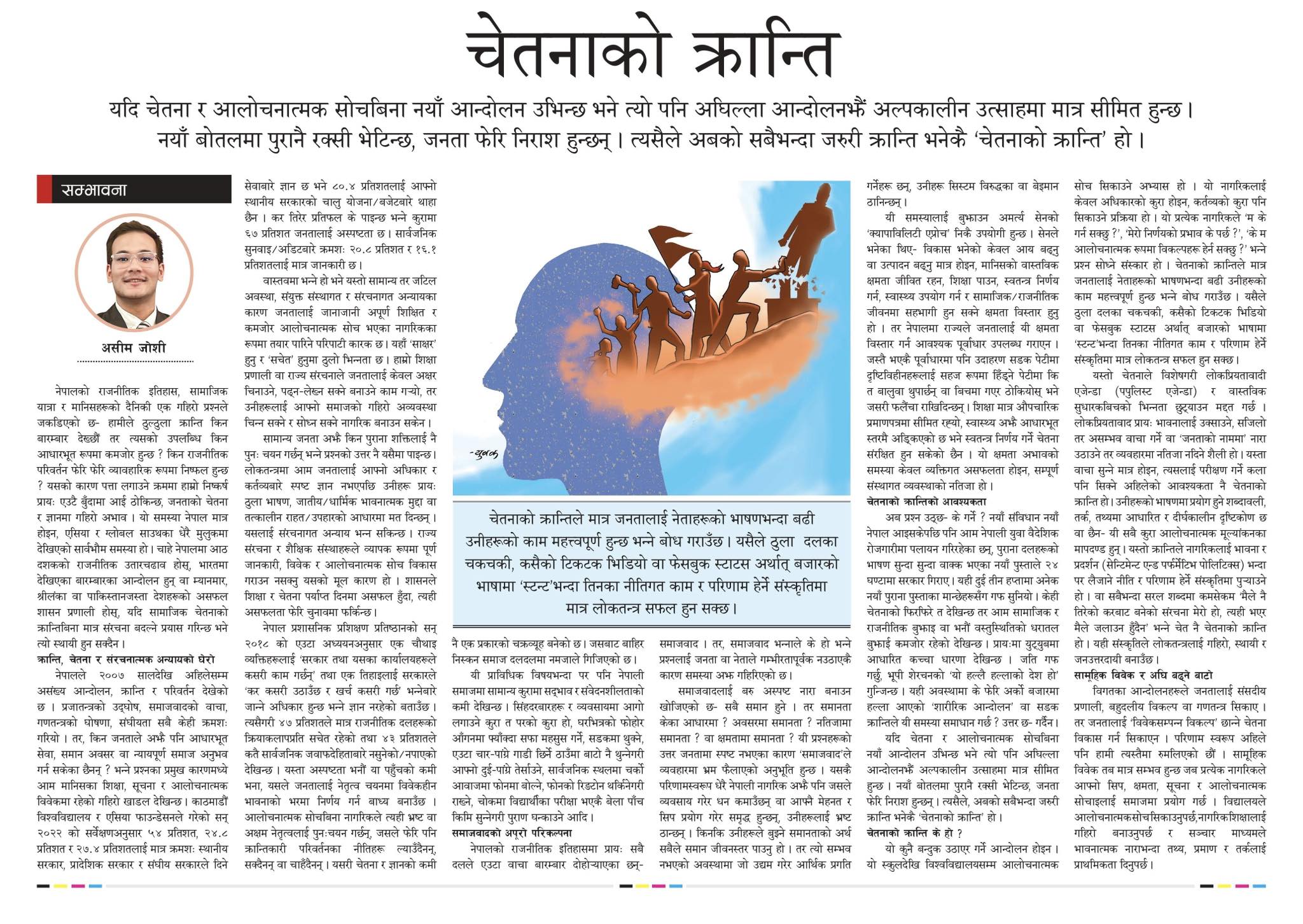
No revolution can bring a change, until and unless it is a revolution of consciousness!
Oceanic Inspiration
A revolution of consciousness is a shift in how we see the state, society and ourselves. It moves citizens from passive awareness to active responsibility, from entitlement to stewardship. Without this internal transformation, policies repeat, institutions stagnate and development remains superficial rather than genuinely empowering. What stirred this conviction in me was not theory alone but the quiet violence of everyday contradictions: a constitution that speaks of dignity while ordinary people still struggle to access basic services without pleading, connections or bribes; leaders who invoke “the people” but treat them as an audience, not as co-authors. Watching friends lose faith in public institutions, retreat into private survival, or simply migrate away created a kind of moral dissonance: if everyone withdraws into cynicism, who is left to demand better and embody it in practice.
Over time, exposure to debates on justice, democracy and the capability to live a life one has reason to value deepened this unease. It became clear that development is not only about higher incomes or more infrastructure, but about expanding real freedoms-freedom from fear of arbitrary power, freedom to question authority, freedom to organise without being dismissed as naïve or “too political”. Seeing how often talented, thoughtful people accepted a culture of low expectations from the state convinced me that the most profound transformation must begin in how citizens imagine their own agency.
Development is not only about higher incomes or more infrastructure, but about expanding real freedoms—freedom from fear of arbitrary power, freedom to question authority, freedom to organize without being dismissed as naïve or “too political”.
My Own Experiences
My work and observations in different sectors, including energy, reinforced this broader realization: similar patterns of promise without delivery, consultation without real listening and institutions that look impressive on paper yet falter in practice. Across domains, the same underlying story appeared—systems do not change sustainably when people relate to them as clients seeking favors instead of stewards claiming responsibility. This cross-cutting pattern, rather than any single sector, pushed me towards a more holistic advocacy for inner and collective transformation.
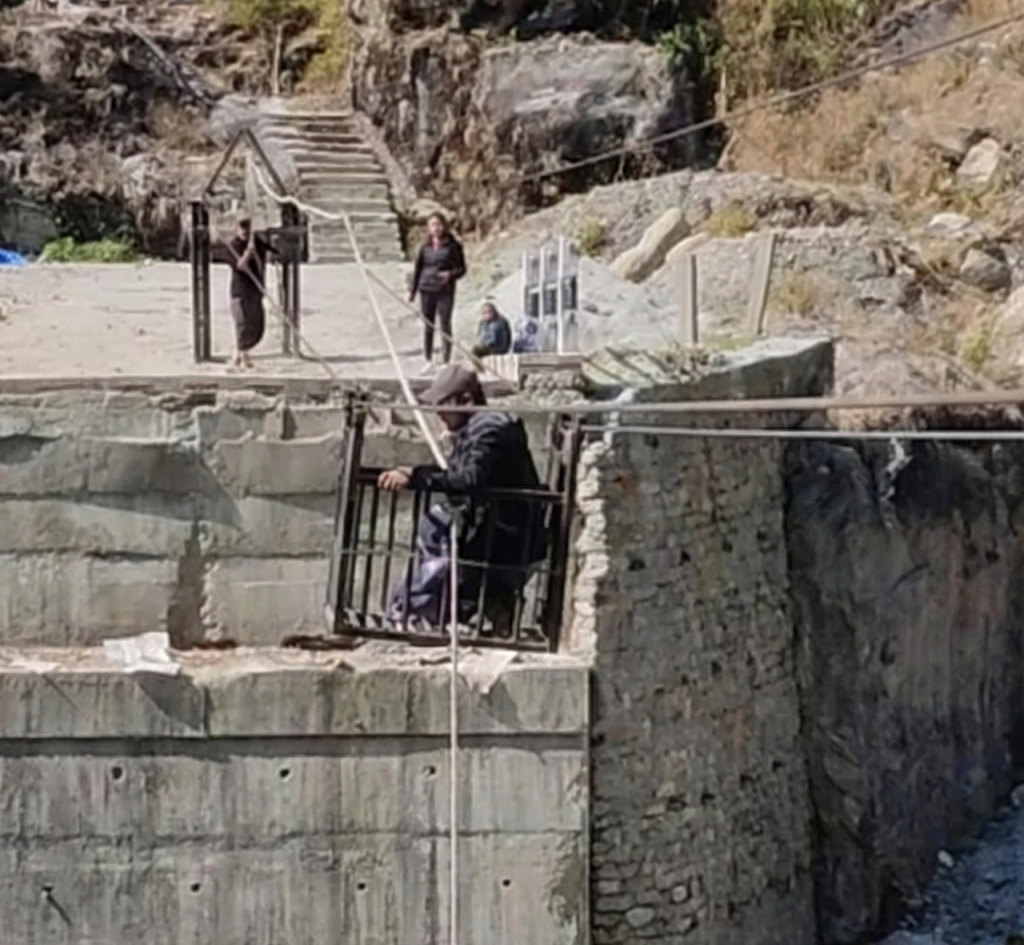
Photo: Ashim Joshi using Cable Bridge to cross Melamchi River in Helambu, NepalAn Ethical Imperative
This is why the choice to actively advocate for a revolution of consciousness feels less like a project and more like an ethical imperative. The aim is to invite people—from students and professionals to local leaders and migrants returning home—to reimagine themselves as custodians of the commons, capable of saying both “the system has failed us” and “we are the system”. Out of that double awareness, a different kind of citizenship can emerge: one that replaces resignation with responsibility, performative outrage with organized action, and thin development with genuinely shared empowerment

Playcards


